
Why Does My Dog Sleep on My Clothes? 7 Real Reasons Explained
Learn why dogs sleep on your clothes, what it means emotionally, and whether it’s a sign of love, comfort, or separation anxiety.
WHY DOES MY DOG SLEEP ON MY CLOTHES
4/18/20267 min read


Why Your Dog Sleeps on Your Clothes (And What It Means)
Introduction
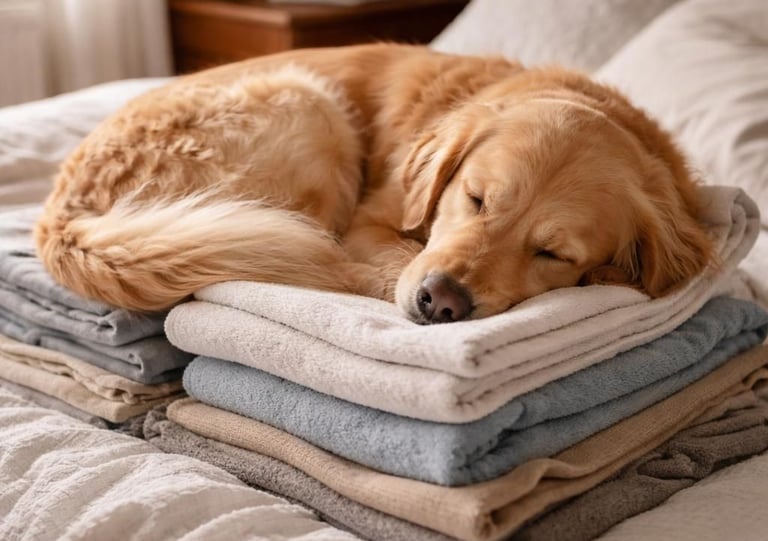
If you’re a dog owner in the United States, you’ve probably had this moment more than once—you walk into your bedroom or laundry area and find your dog curled up on your clothes like it’s the most comfortable bed in the world.
Sometimes it’s your fresh laundry. Sometimes it’s your worn hoodie. And sometimes it’s that random t-shirt you didn’t even realize you left on the chair.
Naturally, this leads to questions like:
Why does my dog sleep on my clothes instead of its own bed?
Is this normal behavior or a sign of anxiety?
Is my dog trying to “claim” me or something else?
The truth is, this behavior is extremely common in American households, and it has nothing to do with randomness or bad habits. Instead, it comes from a combination of emotional bonding, scent recognition, instinct, comfort-seeking behavior, and sometimes mild separation anxiety.
Dogs are not just pets—they are emotionally intelligent animals that build deep attachments to their humans. And your clothes, whether you realize it or not, are one of the strongest emotional signals you give off every single day.
Let’s break down exactly what’s happening in your dog’s mind.
1. Your Scent Is Your Dog’s Emotional Anchor
Dogs don’t experience the world like humans do
To understand this behavior, you first need to understand one simple fact: dogs do not rely on sight the way humans do. Instead, their world is built around smell.
A dog’s nose contains up to 300 million scent receptors, compared to about 5 million in humans. That means everything you do leaves behind a powerful scent trail.
But more importantly, scent is not just information for dogs—it is emotion, memory, and safety all combined.
Why your clothes are emotionally powerful to your dog
Your clothes carry more than just fabric. They carry:
Your natural body odor
Sweat and skin oils
Hormonal and emotional chemical signals
Environmental smells from your day (work, car, outdoors)
To your dog, this mix is like a complete “you identity map.”
So when your dog sleeps on your clothes, they are not just lying on fabric—they are surrounding themselves with your presence.
This is why dog sleeping on owner clothes meaning is almost always linked to emotional comfort and bonding.
Why worn clothes matter more than clean ones
Many dog owners notice something interesting: dogs prefer dirty laundry over clean clothes.
That’s because worn clothes contain the strongest concentration of your scent. Clean clothes smell neutral or detergent-based, but worn clothes smell like you.
For dogs, stronger scent = stronger emotional connection.
2. Separation Anxiety and Emotional Comfort Behavior
Dogs feel emotional distance, not just physical distance
Dogs do not understand time the way humans do. When you leave for work or errands, your dog doesn’t think “they’ll be back later.” Instead, they experience your absence as emotional separation.
For some dogs, especially highly bonded ones, this can create mild stress or anxiety.
How your clothes help reduce anxiety
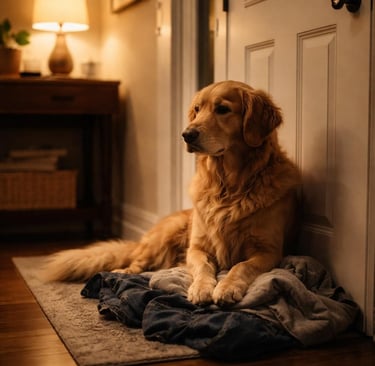
When your dog sleeps on your clothes, they are using your scent as a self-soothing mechanism.
This behavior is often linked to dog anxiety sleeping on clothes, especially in dogs that:
Follow their owners everywhere
Become restless when alone
Wait near doors or windows
Refuse to settle in empty rooms
Your scent acts like emotional reassurance. It tells them:
“My human is still here, even if I can’t see them.”
Why this is similar to human behavior
This is actually very similar to how humans use comfort objects:
A child with a blanket
A person hugging a hoodie
Someone sleeping with a partner’s shirt while they are away
Dogs are doing the same thing—just through scent instead of memory objects
3. Deep Emotional Bonding With You
Dogs form attachment styles like humans
Modern behavioral science has confirmed that dogs form attachment bonds similar to human infants. They don’t just “like” their owners—they emotionally attach to them.
This is why your dog may:
Follow you from room to room
Wait for you at doors
Get excited when you return
Seek your scent when you’re gone
Sleeping on your clothes is another form of this attachment.
Clothes as a physical extension of you
To your dog, your clothes are not separate objects. They are you in physical form.
This explains dog emotional attachment behavior where your scent equals emotional safety.
That’s why even expensive dog beds sometimes lose to a simple t-shirt on the floor.
Strong bonding breeds show this more often
Some breeds are especially prone to this behavior:
Labrador Retrievers
Golden Retrievers
French Bulldogs
Border Collies
Rescue dogs with past emotional trauma
These dogs are more likely to show dog bonding behavior sleeping on clothes because they are naturally more emotionally dependent on humans.
4. Physical Comfort and Environmental Preference
Not everything is emotional—comfort matters too
While emotion plays a big role, physical comfort is also important.
Your clothes offer:
Soft texture
Warmth from body heat
Familiar smell
Flexible sleeping shape
Why laundry piles are especially attractive
A pile of laundry creates the perfect dog environment because it combines:
Warmth from recent use
Strong scent concentration
Soft cushioning layers
This is why dogs often choose laundry over beds.
It explains many cases of why my dog sleeps on my bed clothes instead of their designated sleeping area.
Puppies especially prefer soft nesting spots
Puppies naturally seek warmth and softness because it mimics their early litter environment. That’s why they often sleep on clothes more frequently than adult dogs.
5. Pack Instinct and Scent Mixing Behavior
Dogs still operate on pack psychology
Even though dogs are domesticated, they still carry instincts from wild pack behavior. In a pack, scent is used to identify members and strengthen group unity.
What happens when your dog sleeps on your clothes
When your dog lies on your clothes:
They absorb your scent
They leave their own scent
A combined “family scent” is created
This reinforces emotional belonging.
Why this is NOT dominance
This behavior is often misunderstood. It is not dominance or territorial control. It is social bonding behavior.
Modern veterinary behaviorists classify it as affiliation, not hierarchy.
6. Stress Relief and Emotional Regulation
Dogs naturally seek scent when stressed
When dogs feel overwhelmed, uncertain, or overstimulated, they instinctively look for familiar scents to stabilize their emotions.
When this behavior increases
You’ll often see more of this behavior during:
Fireworks or thunderstorms
Moving homes
Schedule disruptions
Owner absence
New visitors in the home
This falls under dog behavior sleeping on clothes as a coping response.
Scent reduces cortisol levels
Familiar scents can actually lower stress hormones in dogs. This is why your presence—even through clothing—has a calming effect.
7. Puppy Development and Long-Term Habit Formation
Early experiences shape adult behavior
Puppies rely heavily on scent for survival and comfort. Their mother’s scent represents safety, warmth, and food.
Why this behavior lasts into adulthood
When puppies transition to human homes, your scent replaces the mother’s scent as the primary emotional anchor.
This is why puppy sleeping on clothes meaning often continues long-term.
It becomes a learned emotional association:
“My human’s scent = safety and comfort.”
Is It Normal for Dogs to Sleep on Clothes?
Yes—this is extremely common in the U.S.
Veterinarians and trainers generally consider this behavior normal unless it becomes obsessive.
It usually indicates:
Emotional bonding
Comfort seeking
Scent-based security
When it may signal a concern
It may require attention if your dog:
Refuses all other sleeping areas
Becomes distressed without your scent
Shows panic when alone
Cannot relax independently
This may indicate dog separation anxiety sleeping on clothes.
When You Should Be Concerned
Signs of over-dependence
Constantly searching for your clothes
Whining when separated
Loss of interest in toys or food
Extreme attachment behavior
What it means emotionally
This does not mean your dog is “bad” or unhealthy. It simply means they have a strong attachment style, which may need gentle behavioral balancing.
“If your dog shows unusual weakness or appetite changes, read Why Is My Dog Not Eating and Acting Weak? Serious Illness Signs.”
Should You Stop This Behavior?
Most of the time, no
If your dog occasionally sleeps on your clothes, it is completely fine.
When to redirect it
Only consider training changes if:
It becomes obsessive
It replaces normal sleeping habits
It causes emotional dependency
How to Manage It Gently
Use scent transfer alternatives
Place a worn shirt in your dog’s bed to reduce dependency on laundry piles.
Encourage independence
Reward your dog when they use their own bed calmly.
Reduce anxiety triggers
Keep routines consistent
Provide mental stimulation
Avoid long unpredictable absences
“Explore our Dog Health & Behavior Guide Hub to learn more about dog behavior, symptoms, and health warning signs.”
Final Conclusion – What This Behavior Really Means
At its core, this behavior is not about clothes.
It is about connection.
When your dog sleeps on your clothes, it means your scent represents:
Safety
Love
Emotional stability
Trust
In most cases, it is a healthy sign of bonding. In some cases, it may reflect mild anxiety—but even then, it comes from attachment, not behavioral issues.
Your dog isn’t just sleeping on fabric.
They are resting on their connection to you
FAQs
Why does my dog sleep on my dirty laundry instead of clean clothes?
Because dirty laundry carries the strongest and most natural version of your scent.
Is it normal for dogs in the U.S. to sleep on clothes?
Yes, it is very common and widely considered normal behavior.
Why does my dog sleep on my shirt when I’m not home?
Your scent helps reduce separation stress and gives emotional comfort.
Does this mean my dog has separation anxiety?
Not necessarily. It depends on whether other anxiety behaviors are present.
Should I stop my dog from sleeping on my clothes?
Only if it becomes excessive or obsessive. Otherwise, it is harmless.



Contact.
Questions? Reach out anytime, we're here to help.
Phone
help@healthypawscare.online
© 2025. All rights reserved.