
Why Does My Cat Scratch Furniture? Common Reasons and Safe Solutions | Healthy Paws Care
Learn why your cat scratches furniture, common reasons behind the behavior, and safe ways to protect your home while keeping your cat happy.
WHY DOES MY CAT SCRATCH FURNITURE
4/6/20262 min read
Why Does My Cat Scratch Furniture?
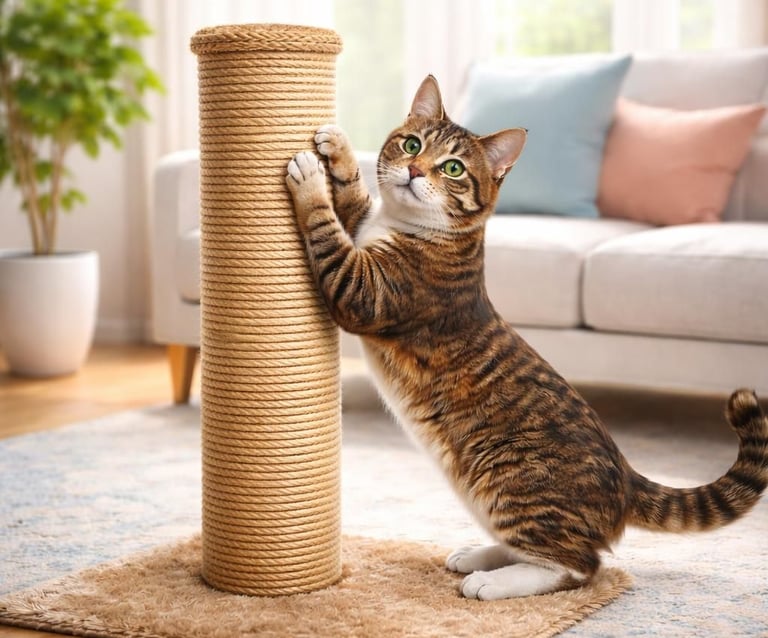
Scratching is a natural behavior for domestic cat. While it may be frustrating for owners, scratching serves several important purposes for cats, including claw maintenance, marking territory, and stress relief. Understanding why your cat scratches furniture can help you provide safe alternatives while preserving your home.
Cats scratch for instinctive reasons that go back to their wild ancestors. Even well-behaved indoor cats need opportunities to satisfy this natural urge.
Common Reasons Cats Scratch Furniture
1. Sharpening Claws
Scratching removes the outer nail layer and keeps claws healthy and sharp. Furniture often provides a satisfying texture for this purpose.
2. Marking Territory
Cats have scent glands in their paws. When they scratch furniture, they are leaving visual and scent marks to signal ownership.
3. Stretching Muscles
Scratching stretches a cat’s back, shoulders, and leg muscles. Furniture may provide a tall or sturdy surface for a deep stretch.
4. Stress Relief or Boredom
Cats often scratch when anxious, overstimulated, or bored. Scratching furniture can serve as a coping mechanism.
Signs Scratching Is Normal
Cat uses multiple scratching spots
Claws appear healthy
Cat seems relaxed after scratching
Scratching occurs occasionally
When Scratching Becomes Problematic
Watch out if:
furniture damage is extensive
cat scratches excessively or obsessively
scratching is accompanied by other behavioral changes
Safe Solutions for Furniture Scratching
1. Provide Scratching Posts
Offer posts made of sisal, carpet, or cardboard in areas your cat frequents.
2. Use Cat Trees
Tall cat trees can satisfy the need to climb and scratch in one place.
3. Apply Deterrents
Double-sided tape, aluminum foil, or furniture covers can discourage scratching.
4. Trim Claws Regularly
Keeping nails short reduces damage from scratching.
5. Offer Toys and Interactive Play
Engaging your cat helps reduce boredom-driven scratching.
Choosing the Right Scratching Surface
Vertical vs. horizontal preference
Texture cats enjoy
Stability is important; wobbly posts may be ignored
Positive Reinforcement
Reward your cat with treats or praise when they use a scratching post or cat tree. Positive reinforcement works better than punishment.
Helpful Products for Your pet
sisal scratching posts
cardboard scratch pads
cat trees
claw trimming tools
interactive cat toys
When to Seek Advice
If scratching suddenly increases or is accompanied by aggression, consider consulting a veterinarian. Underlying stress or medical issues may play a role.
Final Thoughts
Understanding Why Does My Cat Scratch Furniture helps owners balance natural behavior and home protection. Providing appropriate alternatives and positive reinforcement ensures happy cats and happy homes.
Frequently Asked Questions (FAQ) 🐾
Why does my cat scratch the same furniture repeatedly?
Cats may prefer a specific texture, height, or location. It also marks territory with scent glands.
Can scratching be harmful to my cat?
Scratching itself is not harmful. Only make sure nails are trimmed and surfaces are safe.
Do all cats need scratching posts?
Yes, every cat benefits from at least one scratching surface.
How do I stop my cat from scratching my couch?
Use deterrents like double-sided tape, provide posts nearby, and reinforce positive behavior with rewards.
Can I train my cat not to scratch furniture?
Yes, consistent positive reinforcement and suitable alternatives work well.