
Signs Your Cat Is Stressed at Home: Common Behaviors Every Owner Should Know
Signs your cat is stressed at home include hiding, appetite changes, and unusual behavior. Learn common stress signals and simple ways to help.
SIGNS YOUR CAT IS STRESSED AT HOME
3/29/20261 min read
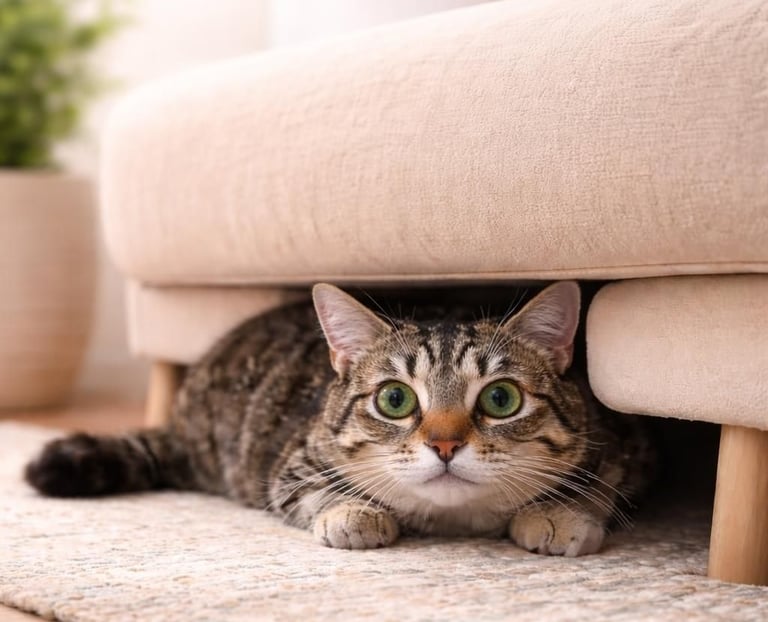
Signs Your Cat Is Stressed at Home
Cats are sensitive animals, and even small changes at home can affect their behavior. Stress may appear slowly or suddenly, depending on the cause. Many owners first notice that their cat behaves differently without obvious illness.
Understanding stress signs early helps prevent bigger problems and keeps your cat comfortable.
Common Signs of Stress in Cats
1. Hiding More Than Usual
A stressed domestic cat may stay under beds, behind furniture, or in quiet corners for long periods.
2. Eating Less or Refusing Food
Appetite changes are common when cats feel uncomfortable.
3. Increased Meowing
Some cats become unusually vocal and meow more often.
4. Aggressive Behavior
Stress can cause:
scratching
biting
sudden irritation
5. Over-Grooming
Excess licking may lead to hair thinning.
6. Litter Box Changes
A stressed cat may avoid the litter box or urinate in unusual places.
Helpful article
Common Causes of Stress at Home
Stress often starts after changes such as:
new visitors
moving furniture
loud sounds
new pet arrival
routine changes
Physical Signs to Watch Carefully
Sometimes stress also appears as:
fast breathing
restless sleeping
tail flicking
tense posture
How to Help a Stressed Cat
Keep Routine Stable
Feed and play at regular times.
Create Quiet Safe Areas
Allow your cat to rest in peaceful spaces.
Reduce Loud Disturbances
Lower sudden noise when possible.
Use Gentle Interaction
Avoid forcing contact when the cat wants space
Helpful Products for Your PET
Useful items:
calming bed
scratching post
interactive toy
covered resting area
When Stress May Need Professional Attention
Seek veterinary advice if stress signs continue with:
weight loss
vomiting
breathing changes
long-term hiding
Prevention Tips
keep feeding schedule regular
introduce changes slowly
provide daily mental activity
Final Thoughts
Recognizing Signs Your Cat Is Stressed at Home early helps owners respond before behavior becomes worse. Calm surroundings and patience often improve recovery.