
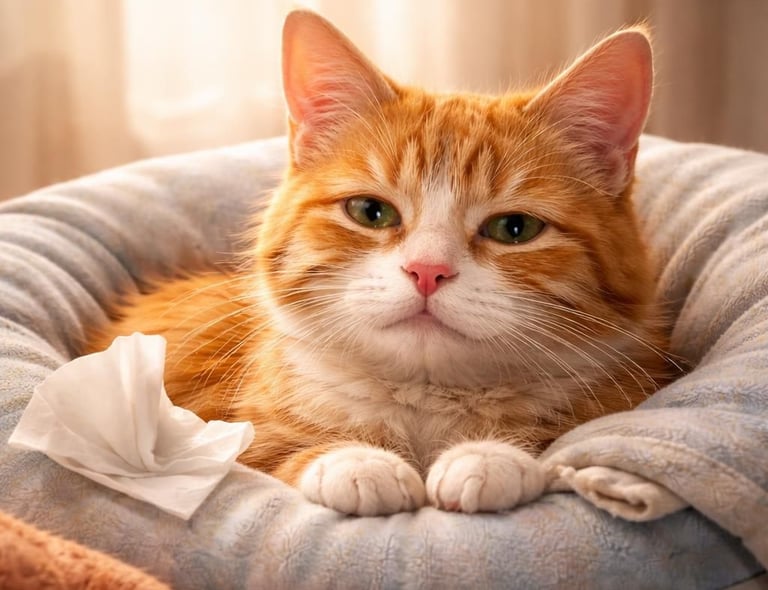

Cat Upper Respiratory Infection: Symptoms, Causes, and Fast Home Care
A cat upper respiratory infection (URI) is one of the most common illnesses affecting a domestic cat. It mainly affects the nose, throat, and sinuses, similar to a human cold. While many cases are mild, some can become serious if not managed properly.
Early recognition and supportive care are very important to help your cat recover faster and avoid complications.
What Is a Cat Upper Respiratory Infection?
A feline upper respiratory infection is usually caused by viruses or bacteria that affect the respiratory system. It spreads easily between cats, especially in multi-cat environments or shelters.
The infection impacts:
nasal passages
throat
sinuses
sometimes eyes
Common Causes of Upper Respiratory Infections
1. Viral Infections
Most cases are caused by viruses such as feline herpesvirus or calicivirus. These spread through:
sneezing droplets
shared bowls
close contact
2. Bacterial Infections
Bacteria can develop after a viral infection weakens the immune system.
3. Stress and Weak Immunity
Stress can reduce a cat’s immune defenses, making infection more likely.
4. Environmental Exposure
Poor ventilation, dirty litter areas, or exposure to infected cats increases risk.
Symptoms of Cat Upper Respiratory Infection
1. Sneezing and Nasal Discharge
Frequent sneezing is one of the earliest signs. Discharge may be clear, yellow, or thick.
2. Runny or Stuffy Nose
A congested nose makes breathing harder and affects smell, which reduces appetite.
3. Watery or Red Eyes
Eye discharge or irritation is common in many respiratory infections.
4. Coughing or Gagging
Some cats may cough due to throat irritation.
5. Loss of Appetite
Because cats rely on smell to eat, congestion can reduce their desire to eat.
6. Lethargy
Infected cats often sleep more and show less interest in activity.
7. Fever
Mild fever may occur as the body fights infection.
How Cat Body Language Changes During Infection
Sick cats often show subtle signs:
sitting hunched
reduced grooming
closed or half-open eyes
hiding in quiet places
These changes should not be ignored.
Fast Home Care Tips for Recovery
1. Keep Your Cat Warm and Comfortable
Provide a quiet, warm resting space away from noise and stress.
2. Increase Humidity
Steam or a humid environment helps loosen nasal congestion.
3. Encourage Eating
Offer strong-smelling foods like wet food or warmed meals to stimulate appetite.
4. Clean Nose and Eyes Gently
Use a soft damp cloth to remove discharge carefully.
5. Keep Hydration High
Always provide fresh water. Cats with infections may drink less than usual.
6. Reduce Stress
Keep routines stable and avoid introducing new stress factors.
When Cat URI Becomes Serious
Seek veterinary help if your cat shows:
difficulty breathing
refusal to eat for more than 24 hours
thick yellow/green discharge
extreme lethargy
worsening symptoms
Early treatment prevents complications.
How It Spreads Between Cats
Upper respiratory infections are highly contagious and spread through:
sneezing droplets
shared food bowls
grooming each other
contaminated surfaces
Isolation of sick cats is often recommended.
Prevention Tips
keep vaccinations up to date
maintain clean environment
avoid overcrowding
reduce stress levels
ensure proper nutrition
Recovery Time
Most mild cases improve within 7–14 days, but some viral infections may take longer or return during stress.
Helpful Products for Your pet
humidifier
soft cat bedding
warming pads
stainless steel bowls (easy to clean)
gentle grooming wipes
Final Thoughts
A Cat Upper Respiratory Infection can look scary, but most cases are manageable with proper care and attention. Recognizing symptoms early and providing supportive home care can greatly improve recovery for your domestic cat.
Always monitor changes closely and consult a professional if symptoms worsen or do not improve.
Frequently Asked Questions (FAQ) 🐾
Is cat upper respiratory infection dangerous?
Most cases are mild, but severe infections can become serious without care.
Can cats recover at home?
Yes, mild cases often improve with supportive home care.
Is URI contagious to other cats?
Yes, it spreads easily between cats.
How long does recovery take?
Usually 1–2 weeks depending on severity.
What is the best food for a sick cat?
Strong-smelling wet food is often more appealing.i7
Cat Upper Respiratory Infection: Symptoms, Causes, and Fast Home Care
Learn the symptoms, causes, and safe home care tips for cat upper respiratory infection and when to seek veterinary help for your cat’s recovery.
CAT BREATHING FAST WHILE RESTINGVIRAL DISEASES IN CATS
4/13/20262 min read